




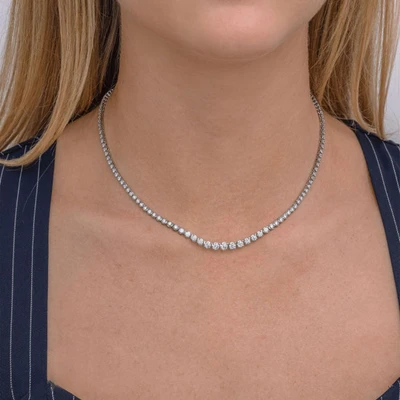
Why Tennis Necklaces Are Having a Moment Right Now
LINE JEWELRY has been building momentum for a few years, and the tennis necklace is where that trend meets its most literal expression: it's nothing but the line. Part of the appeal is how well it photographs against a plain neckline, which is a large part of why it keeps showing up on red carpets and in editorial styling. Part of it is layering culture: a tennis necklace gives you a fixed, low-maintenance anchor piece you can build a look around instead of choosing a new necklace every time.
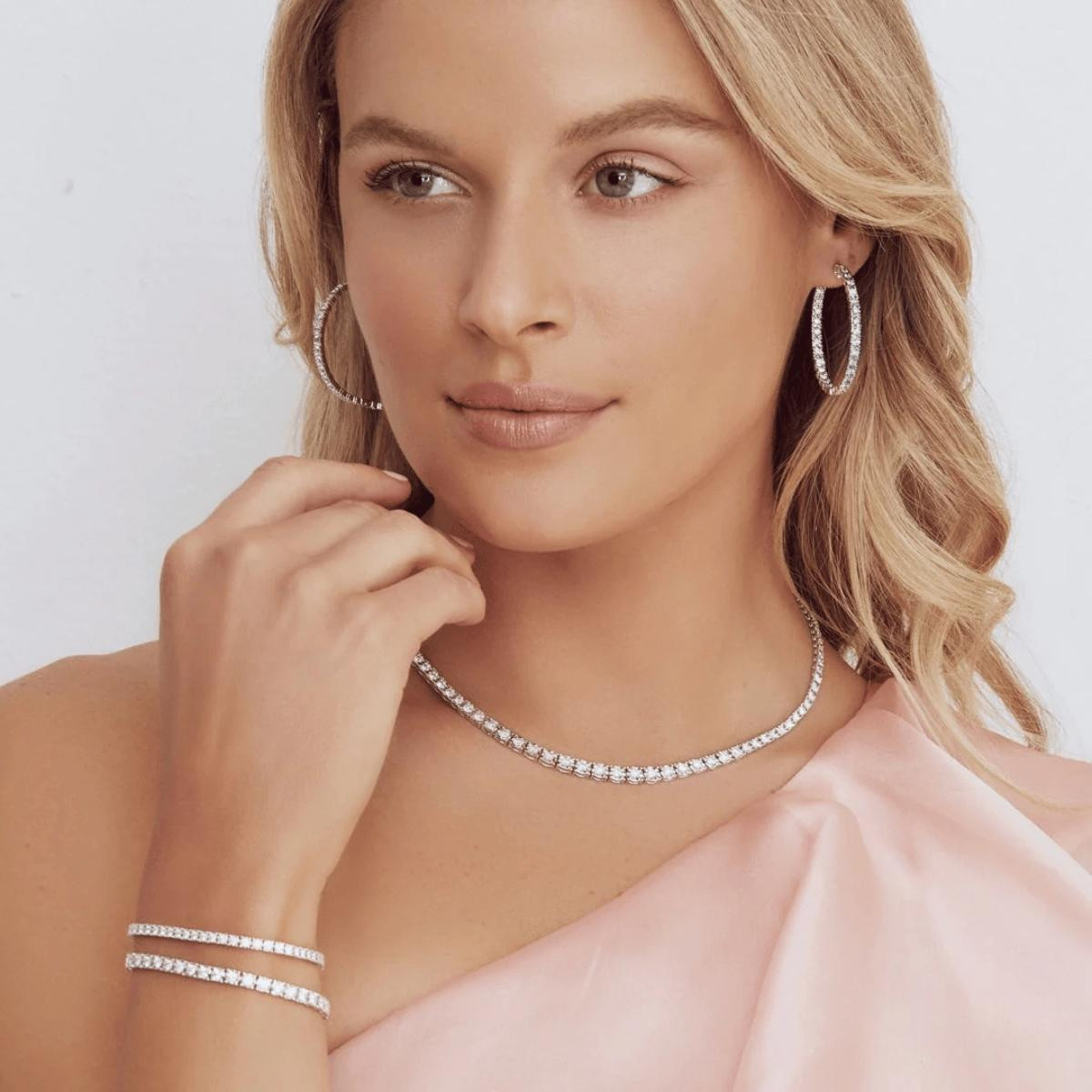
There's also a practical draw. Buyers who already own or want a tennis bracelet are a natural audience for a matching or complementary necklace, since the setting language, prong, bezel, or pave, and the continuous-line idea carry over directly. If you already like the bracelet, the necklace is often an easy next step rather than a completely new decision.
Bezel Tennis Necklace and Pave Tennis Necklace: Two Settings, Two Statements
A bezel tennis necklace wraps each stone in a thin rim of metal, which protects the girdle edge and gives the piece a smoother, almost architectural profile against skin. It's the harder-wearing option and the one we recommend for anyone who travels with jewelry rather than storing it. A pave tennis necklace, in contrast, sets smaller diamonds close together with minimal visible metal, which reads as a denser sparkle at a lower per-stone cost. Pave asks for more careful cleaning, since debris collects between stones faster than it does in an open four-prong setting.
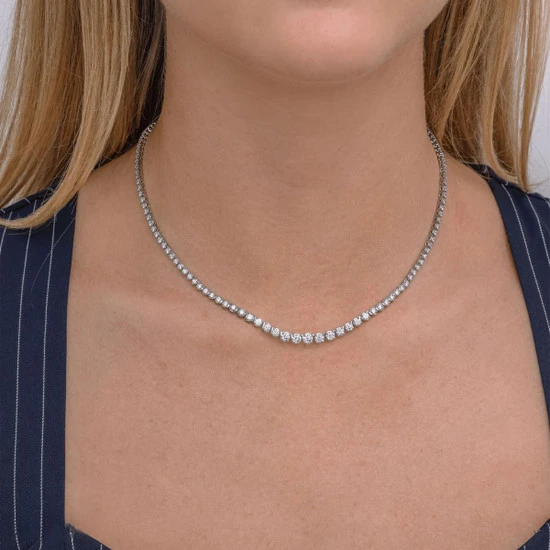
A classic four-prong tennis necklace sits between the two: more light exposure to each stone than a bezel setting, sturdier than a pave line. Our own Shy Creation .95 CT Diamond Tennis Necklace in 14kt yellow gold uses this setting, which is the one most people picture when they hear "tennis necklace."
How to Style a Tennis Necklace
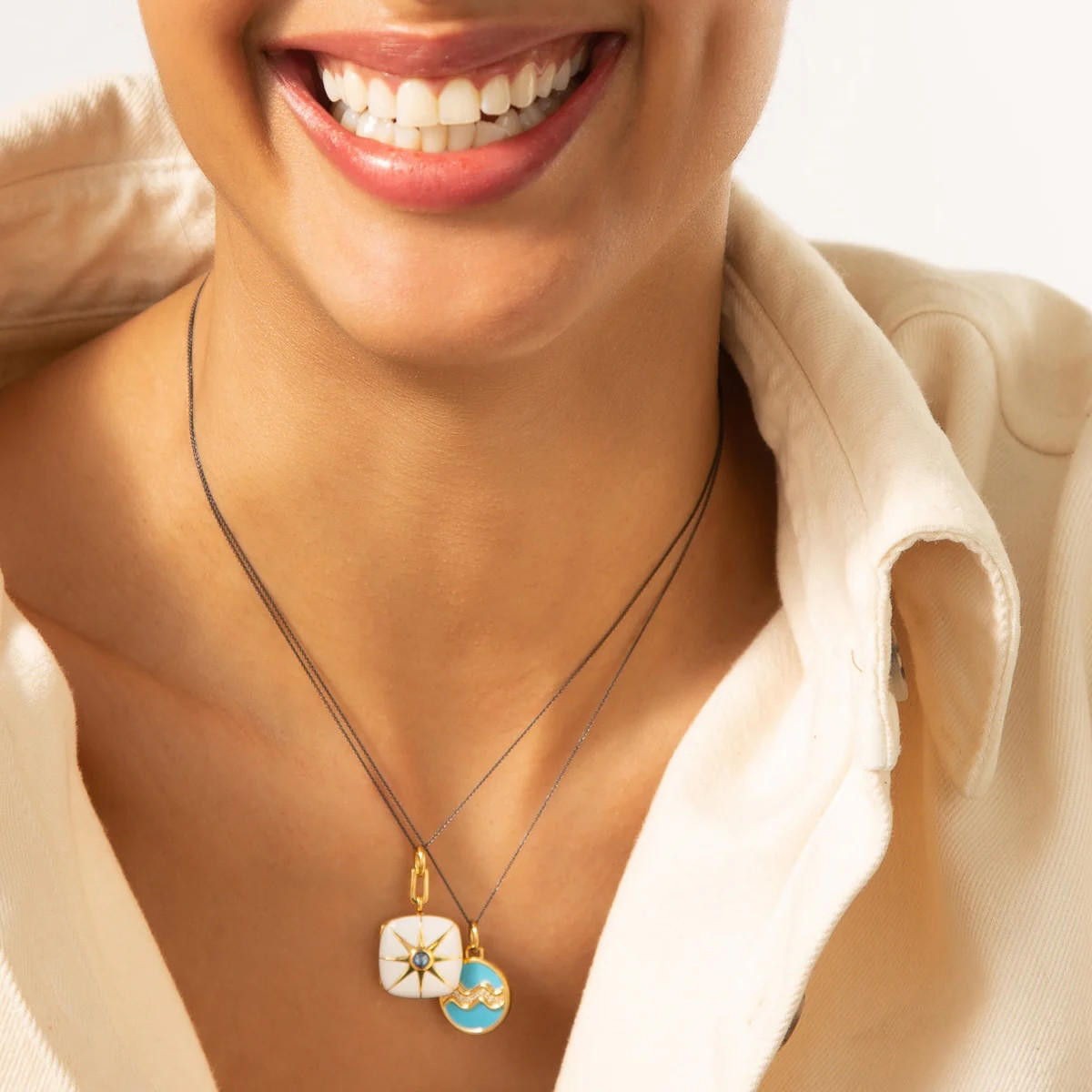
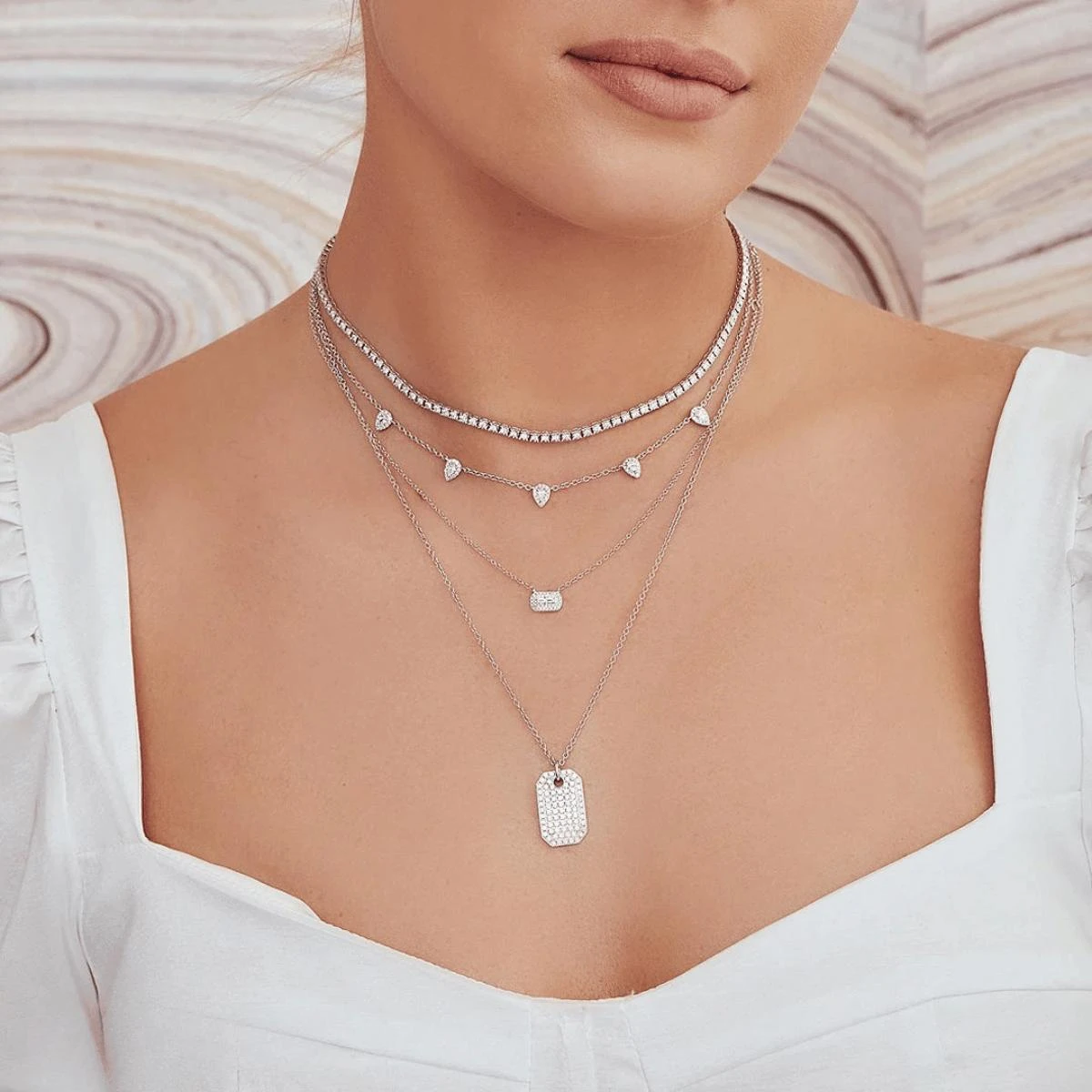
Worn alone, a tennis necklace does the whole job by itself against a low or open neckline, a crew neck, or even a fitted collar, since the line sits close enough to the throat that it doesn't compete with the garment. Layered, it works best short, against a longer pendant chain from our necklaces collection, so the two pieces sit at different lengths and the tennis line stays visible instead of tangling with the pendant.
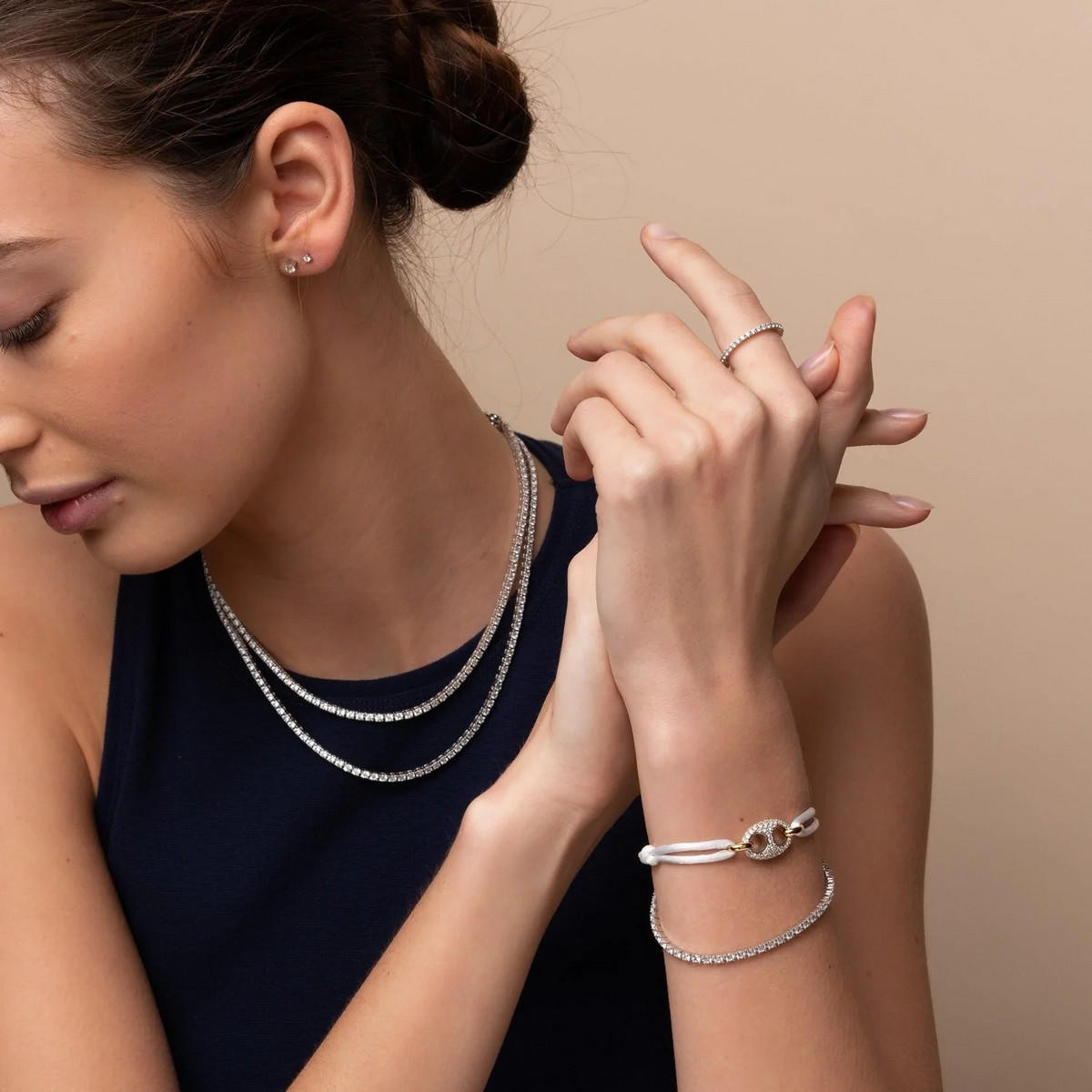
For clients building toward a full fine jewelry collection, the tennis necklace is often the anchor piece: the one that stays on while earrings and rings rotate seasonally. It also moves easily from day to evening, worn alone for daytime and stacked with a second line or a pendant for something dressier.
Layering Without Losing the Line
If the budget calls for a lighter entry point, our Ti Sento Milano Tennis Style Pave Sterling Silver Milano Necklace gives you the same continuous-line look in rhodium-plated silver and cubic zirconia, and can sit above or below a diamond tennis line without competing with it. Some clients pair theirs with a delicate cross necklace at a shorter length for a look that reads personal rather than purely decorative. The rule that holds regardless of budget: keep the tennis necklace as the longest or the lowest piece in the stack, so the line does what it's built to do.
Find Your Tennis Necklace at The Giving Tree Gallery
Whether the starting point is a diamond tennis necklace for everyday wear or a demi-fine version to start layering, our team at The Giving Tree Gallery will walk you through carat weight, metal, and setting until the piece fits how you actually get dressed. Visit us in Sarasota, Florida on St. Armand’s Circle, or reach out to start the conversation.
FAQs
Why is it called a tennis necklace?
The name “tennis necklace” traces back to another piece of jewelry; from a 1987 US Open match, when a bracelet with the same continuous-line setting fell off a player's wrist during play. The term "tennis" stuck to the style and later extended to necklaces built on the same principle.
How should a tennis necklace fit?
A tennis necklace should sit close to the base of the throat without pressing into it, typically between thirteen and eighteen inches depending on neck size, neckline, and the piece itself; many styles are adjustable within that range. Too loose, and the line sags instead of following the collarbone. Too tight, and individual links can twist out of alignment.
What are the most popular settings for tennis necklaces?
The most popular setting for a tennis necklace remains the four-prong settings, because they expose the most light to each stone. Bezel settings are gaining ground for durability, and pave settings are popular where a denser, lower-cost sparkle is the priority.
What does a tennis necklace cost?
The price of a tennis necklace depends mainly on the type of metal used and the quality of the stone. A demi-fine pave style in rhodium-plated silver and cubic zirconia can start under five hundred dollars, while a diamond tennis necklace in 14kt gold typically starts in the thousands, depending on total carat weight and setting. Our team can help you find the right entry point for your budget.